Classic Pilates Reformer Exercises for Kyphosis (Humpback)

Kyphosis, or hunchback, is one of the most common posture problems today. It particularly occurs in individuals who work sitting down, due to a lack of proper sitting and moving habits. Kyphosis can lead not only to aesthetic problems but also to physical health issues. In this article, we will examine classic Pilates Reformer exercises aimed at correcting posture and strengthening back muscles for individuals with kyphosis. We will detail the purpose of each exercise, its effect on posture, and provide practical suggestions on how to perform these exercises in your studio.

What is kyphosis?
Kyphosis is a condition in which one of the spine's natural curves is increased more than normal . It is most commonly seen in the thoracic (back) region and is known as "hunchback" among the public. This problem can result from factors such as weakened back muscles, poor posture, and a sedentary lifestyle. Shoulder kyphosis can lead to back pain, shortness of breath, and difficulty with daily activities.
Normally, the spine:
The neck (cervical) region has a slight forward curve (lordosis),
The back (thoracic) region has a backward slope (kyphosis),
The lower back (lumbar) region also has a forward curve (lordosis).
In kyphosis, this backward curvature, especially in the thoracic region, increases , causing the person to exhibit a hunched posture forward.
📋 Causes of kyphosis:
Poor posture (postural disorders) is one of the most common causes, especially in young people.
Congenital spinal anomalies
Scheuermann's disease (structural kyphosis seen in adolescence)
Osteoporosis (spinal collapse due to bone loss)
Spinal fractures
Infections (e.g., tuberculosis)
Tumors
⚠️ Symptoms:
Humped appearance in the back region
Back and neck pain
fatigue and muscle tension
In advanced cases, shortness of breath (reduced lung capacity)
The Role of Classic Pilates Reformer Movements
Classic Pilates Reformer movements are essentially designed to correct posture and address muscle imbalances. These movements play a significant role in combating kyphosis, as they both strengthen back muscles and support the natural curvature of the spine. Pilates Reformer offers high resistance and controlled movement, enabling individuals to exercise with correct form.
Long Box Pulling Straps
The Long Box Pulling Straps exercise aims to pull the shoulders back and strengthen the back muscles. This exercise helps improve posture by working the muscles in the upper back.
How to do it: Lie down on the long box of the Reformer, holding the ropes with both hands, and come to the starting position. Activate the muscles in your shoulders by pulling your arms back.
Benefits: Reduces back pain caused by prolonged sitting, improves posture, and increases shoulder stability.

Short Box Series (Flat Back & Side to Side)
The Short Box Series is highly effective because it works both the abdominal and back muscles simultaneously when performed in different positions. The Flat Back and Side to Side variations increase spinal flexibility while relieving pressure on the back.
How to do it: Sit on the short box of the Reformer, secure your feet, and move up and to the sides keeping your back straight.
Benefits: Improves balance, strengthens back muscles, and stretches the sides of the body.
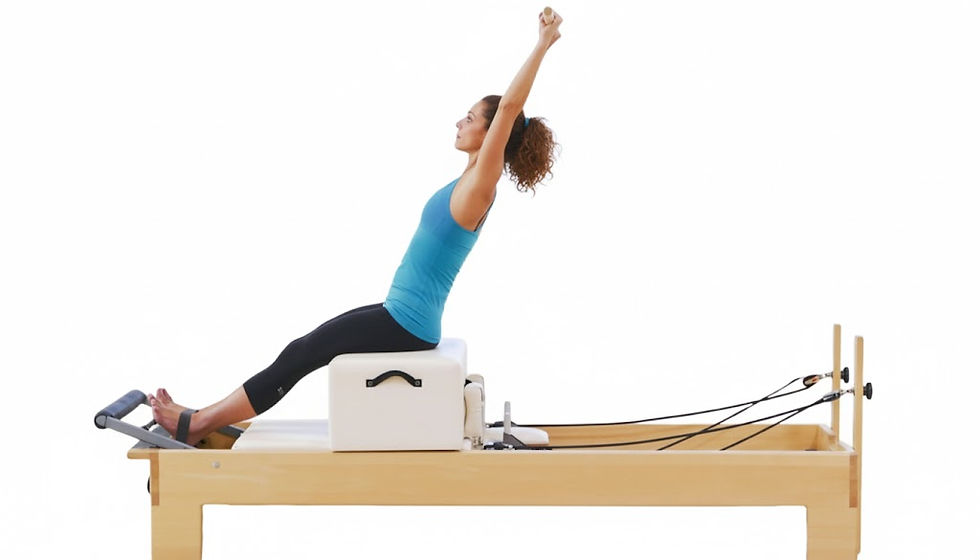
Short Box Series (Flat Back)
Swan on the Reformer
The Swan exercise strengthens back muscles while helping to maintain the natural curvature of the spine. This exercise focuses on the lower back, correcting postural problems.
How to do it: Lie face down on the reformer and lift the edge of the line with your back, pushing forward with your arms.
Benefits: Increases back flexibility, opens the chest, and improves posture.

Chest Expansion
Chest Expansion is an exercise that strengthens the back while opening the chest muscles. This movement helps correct postural problems and has positive effects on overall posture.
How to do it: Stand upright and try to push your torso forward by pulling the ropes behind you. Be careful not to disrupt the neutral posture of your spine.
Benefits: It stretches the chest muscles, strengthens the back, and improves breathing.

Rowing Series
Rowing Series is an excellent exercise, especially for strengthening back muscles and stabilizing the spine. This movement improves balance while also helping to correct postural problems.
How to do it? Sit with your legs straight out towards the headrest of the reformer. Several variations of this series exist. You will see an example in the image below.
Benefits: Strengthens back muscles, stretches the spine, and improves posture.

These classic Pilates Reformer movements offer an effective solution for individuals suffering from kyphosis. Regularly performing these exercises will be beneficial for developing healthy posture and strengthening back muscles. Remember that every movement performed with correct form positively impacts your overall health.
Remember, exercise is important not only for your physical health but also for your mental health. Don't be sedentary and take your health seriously.


Comments