Common Mistakes and Important Compensated Areas to Focus On When Performing Movements in Reformer and Mat Pilates.

Performing Pilates correctly can have a significant impact on your physical health. However, these benefits can be diminished or even lead to injuries if certain common mistakes are made. In this blog post, we'll examine common mistakes made during reformer and mat Pilates exercises, as well as the compensation zones that need attention. Each section will contain informative content, supported by points to avoid while performing movements and professional drawing suggestions. (Examples of some important posture errors are included.)

1- AREAS TO PAY ATTENTION TO:
🧍♀️ Lumbar Region Posture Errors and Their Consequences in Pilates
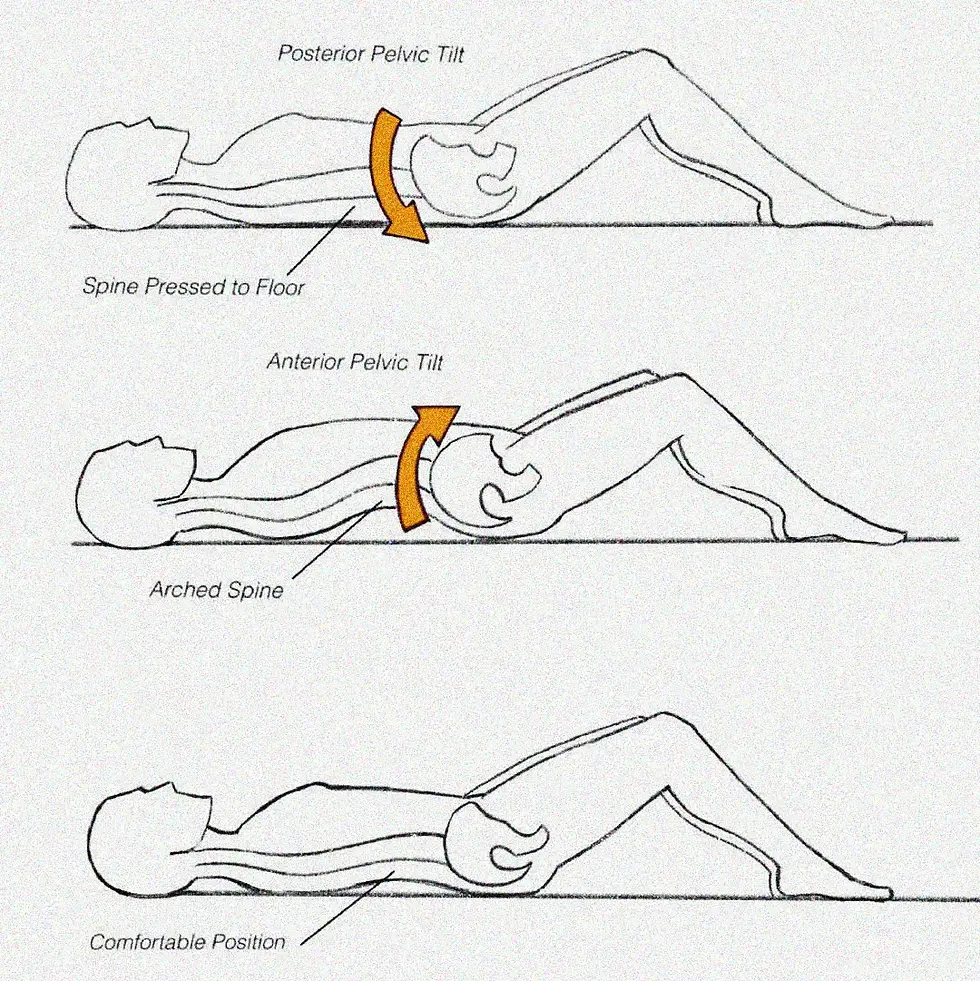
🔻 1. Excessive Lumbar Curve (Increased Lumbar Lordosis)
Error: The lower back collapses excessively inward, causing the tailbone to protrude backward.
Reasons:
Weak abdominal muscles
Tight hip flexors (especially the psoas)
Excessive pelvic anterior tilt habit
Low spinal awareness
Possible Outcomes:
Back pain and excessive strain on back muscles.
Joint impingement (facet compression)
Hip flexor shortening
Uncontrolled use of the waist during movements
🔻 2. Lumbar Flattening
Error: Complete loss of the lumbar curve, pelvic tilt to posterior position.
Reasons:
Overactive or tense abdomen and hamstrings
Weak back muscles
Constantly putting too much pressure on the lower back in an attempt to "protect" it.
Incorrect use of "imprint" technique.
Possible Outcomes:
Increased disc printing
Decreased gluten activation
Stiffness and limited movement in the lower back area.
Decreased pelvic mobility
🔻 3. Asymmetrical Pelvic Position (Hiking / Rotation)
Error: One side of the pelvis is higher than the other, or the pelvis is rotated.
Reasons:
Muscle imbalances (e.g., unilateral QL tense, glute medium weakness)
Scoliosis or postural asymmetry
Daily life habits (carrying the bag on one shoulder, putting the weight on one side)
Possible Outcomes:
Unilateral lower back pain
Uneven loading of the hip joint
Spinal rotation problems
Excessive strain on one side during exercise
🔻 4. Lack of Core Activation
Error: Failure to engage the deep abdominal muscles (TA, multifidus) during the exercise.
Reasons:
Low core awareness
Overwork of superficial muscles (rectus abdominis)
Failure to use proper breathing technique
Possible Outcomes:
Excessive "swinging" of the lumbar region during movement
Decreased quality of movement
Decreased intervertebral stability
Putting stress on discs and connective tissues
🔻 5. Impairment of Breathing and Pelvic Floor Coordination
Error: Holding your breath during exercise or increasing abdominal pressure with the wrong breathing direction.
Reasons:
Excessive effort
Wrong teaching
Lack of pelvic floor awareness
Possible Outcomes:
Increased intralumbar pressure
Increasing the risk of disc herniation
Neck compensation
Tension or weakness in the pelvic floor
✔️ Tips for Fixing It
Directing the breath towards the ribcage .
Finding a pelvic neutral position (with the ASIS and pubis in the same plane)
Activation: "Your abdomen should expand towards your waist, not forward."
Regularly stretch your hip flexors.
Gently engaging the transversus abdominis
Using instructional mirrors or instructor feedback
✅ Common Neck Posture Errors and Their Consequences in Pilates
1. Pressing the chin too hard against the chest (Over-Flexion)
Error: The head is pulled too far forward, and the chin is pressed against the chest.
Results:
Excessive tension in the neck muscles
Difficulty breathing
Stress on the cervical vertebrae
Headache
Weakening in deep neck flexors such as the longus colli.
2. Head falling back / Neck extension (Over-extension)
Error: The head uncontrollably swings backward during the movement (e.g., in bridge).
Results:
Muscle tightness in the back of the neck
Compression in the cervical joints
Dizziness
Creating a predisposition to cervical spondylosis
3. Raising the shoulders / Bringing them closer to the ears
Error: Especially in exercises like "hundred," "plank," and "teaser," the shoulders are pulled towards the ears.
Results:
Overactivity of the trapezius muscles
Neck stiffness
Impairment of scapular stability
Tension and pain in the shoulder-neck line.
4. Begin the movement by “pulling” (taking momentum from the neck)
Error: Using the head, arms, and neck instead of the abdomen during torso lifts.
Results:
Overload on neck muscles
Cervical strain
Disengagement of abdominal muscles → reduced effectiveness of exercise.
Increased pressure on discs
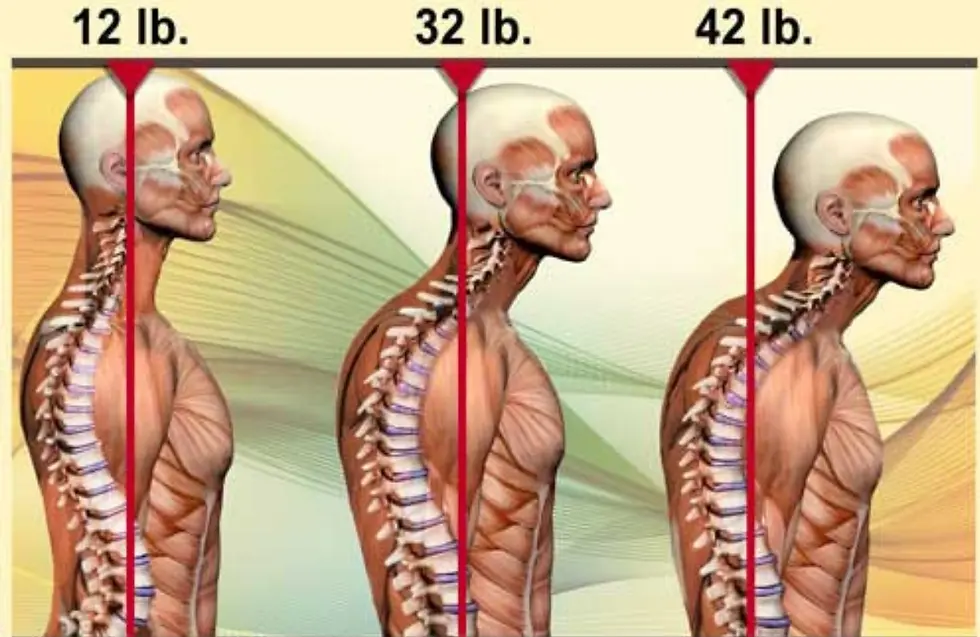
5. Forward Head (Protraction)
Error: The head juts forward; like a computer neck.
Results:
Increased risk of cervical straightening.
Upper trapezius–levator scapulae tension
Chronic neck and upper back pain
Disruption of shoulder alignment
6. Head and torso misalignment (Alignment Problem)
Error: In exercises like side planks, planks, and roll-ups, the head ceases to be a continuation of the body.
Results:
Asymmetric load in the cervical region
Disruption of balance
Decrease in the effectiveness of education
Muscle imbalances (e.g., one side bearing more weight)
7. Tightening the neck while exhaling / Unnecessary muscle tension.
Errors: Stressful breathing, jaw clenching, neck stiffening.
Results:
Stiffness around the neck
Disruption of the fluidity of movement
Reduced use of diaphragm
📌 Tips for Correct Neck Posture in Pilates
Use the rule: " Your neck is getting longer, your chin is a fist's width away from your chest ."
"Melting" the shoulders towards the ribs.
Think of the head as a natural continuation of the spine.
Keep your abdominal muscles (especially the transversus abdominis) active during trunk lifts.
Breathe easily; don't tense your neck.
Do not support the weight of the head with your hands; only provide support.
✅ THE MOST COMMON SHOULDER PROBLEMS AND THEIR CAUSES IN PILATES
1) Raising the shoulders (elevation)
What happens: Your neck shortens, and your trapezius muscles become unnecessarily active.
Reasons:
Overuse of the upper trapezius-levator scapulae muscles
Inferior trapezius–serratus anterior weakness
Stress / habit
Poor awareness of shoulder stabilization results in: neck pain, trapezius spasm, and increased risk of shoulder impingement.
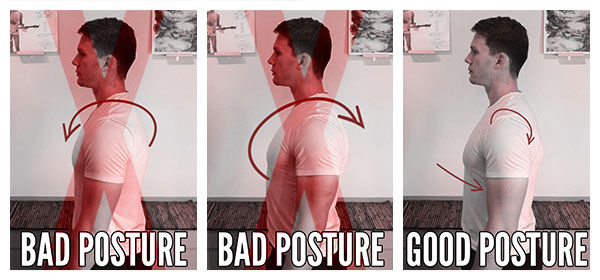
2) Lowering the shoulders forward (protraction/rounding)
What happens: The chest contracts, and the upper back muscles become inactive.
Reasons:
Tightness of the chest muscles (pectoralis major/minor)
Mid-lower trapezius and rhomboid weakness
Computer/phone posture habits result in: upper back pain, decreased breathing capacity, and impaired shoulder stability.
3) Squeezing the shoulders too far back (excessive retraction)
What happens: The chest moves into an "inflated" position and the ribs spread apart.
Reasons:
Don't mistake retraction for "correct posture".
Middle trapezius/rhomboid overuse
Lack of activation of the serratus anterior and inferior trapezius muscles results in: increased lumbar lordosis, shortness of breath, and disruption of the scapulohumeral rhythm.
4) Internal rotation of the shoulders
What happens: The arms close inwards, and the load-bearing is disrupted.
Reasons:
Shortness of the chest and anterior shoulder muscles
Posterior shoulder muscle and rotator cuff weakness. Result: Impingement, shoulder head impingement, rotator cuff strain.
5) Uncontrolled movement of the shoulder and shoulder blades
What happens: Winging of the scapula or arrhythmia may occur.
Reasons:
Serratus anterior weakness
Lack of awareness of shoulder stabilization
Scoliosis or postural asymmetry results in: shoulder instability, neck/upper back fatigue, and uneven weight bearing.
6) Locking the shoulders throughout the movement.
What happens: The added pressure increases, disrupting the natural flow.
Reasons:
The habit of drawing strength from the joint.
Weak trunk stability instead of arm-shoulder stability results in joint irritation and improper force transfer.
7) Trying to stabilize the shoulder by spreading the ribs apart.
What happens: Trunk stability is impaired, lumbar lordosis increases.
Reasons:
Low core activation
Using chest breathing instead of deep breathing results in: lower back pain and unstable movement patterns.
🎯 IN SUMMARY:
Shoulder errors seen in Pilates are mostly due to muscle imbalances , incorrect posture habits , insufficient scapula control , and a failure to recognize that the correct muscles are being activated . Over time, these errors can lead to neck and shoulder pain , shoulder impingement , upper back fatigue , and decreased movement quality .
🔻 Pelvic Posture Errors and Their Consequences in Pilates
1️⃣ Excessive Anterior Pelvic Tilt (Pelvis Tilted Forward)
Pelvic tilting forward; increased lumbar curve.
Why does this happen?
Weak abdominal muscles
Tight hip flexors (especially the iliopsoas)
Desk life
What does it lead to?
Increased lumbar curve → lower back pain
Overload on lower back muscles
Abdominal muscle dysfunction
Loss of core stability during movement
Compensations around the hips and waist.
2️⃣ Posterior Pelvic Tilt (Pelvis Tilted Backwards)
Pelvic tilting backward; flattening of the lower back.
Why does this happen?
Overstretched hamstrings
Weak back muscles
Inactivity or incorrect squat/leg work habits
What does it lead to?
Disruption of the natural curve of the waist.
Overloading the glutes and hamstrings
The core doesn't function correctly due to "tucking" during movements.
Compressions that can increase the risk of herniated disc
3️⃣ Pelvic Rotation (Pelvis Turning From Right to Left)
Excessive turning of the pelvis to one side.
Why does this happen?
Asymmetrical posture habits
One-sided sports (tennis, one-sided carrying)
Scoliosis or hip imbalance
What does it lead to?
Left-right muscle imbalances
Hip, lower back, and SI joint pain.
Deviation from the line and compensation in movements
Unnecessary overloading of one side
4️⃣ Pelvic Hike/Drop (Rising or falling of the pelvis to one side)
One side of the pelvis being higher or lower than the other.
Why does this happen?
Gluteus medius weakness
Unstable posture habits on one leg
Leg length difference
What does it lead to?
Asymmetrical loading in the lower back → pain
Loss of hip stability
Impairment of walking and squat form.
Increased risk of lower extremity injury.
5️⃣ Over-bracing or over-tucking (from a neutral pelvis)
Excessive "abdominal clenching" or excessive "buttock clenching and tailbone retracting".
Why does this happen?
Improper sensation of the neutral pelvis.
The misunderstanding of the command "Squeeze your wife!"
The student is stressing himself out too much.
What does it lead to?
Impairment of diaphragm-pelvic floor coordination.
Breathing restriction
Core malfunctioning
Stiffness and loss of movement in the flow of motion
✔️ What is the Correct Pelvic Posture? (Short Guide)
Front and rear ASIS alignment is at the same level.
The tailbone is neither protruding nor curved inward.
Preserving the natural curve of the waist.
The ribs and pelvis are on a "neutral line" with each other.
A relaxed activation in harmony with breathing.

✅ Common Knee Posture Errors and Their Consequences in Pilates
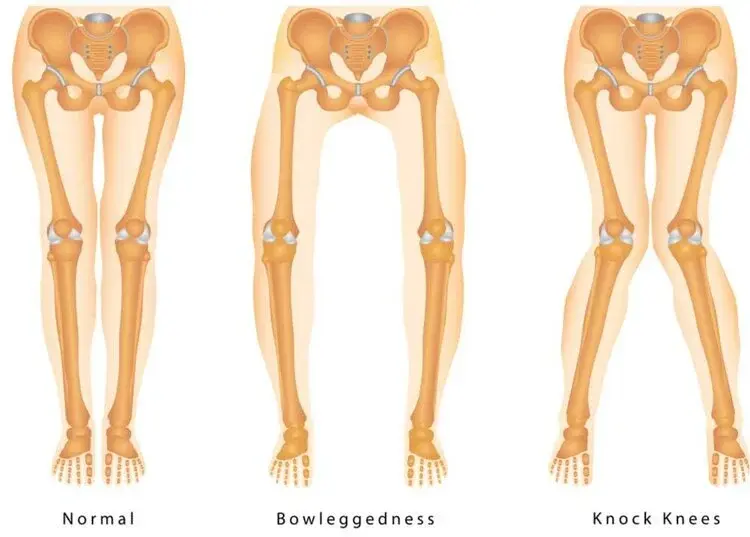
1. Knees collapsing inwards (Valgus – “X-knee” posture)
How does it look? – During squats, lunges, or standing exercises, the knees come closer together and collapse inwards.
Why does this happen?
Weakness of the lateral hip rotators
Gluteus medius weakness
Arch collapse / overpronation
Low body awareness
What will happen?
Ligament strain in the knee (especially the medial collateral ligament – MCL)
Meniscus pressure increases.
Patellofemoral pain (pain around the kneecap)
Waist and hip imbalances
2. Outward turning of the knees (Varus – “O-knee” posture)
How does it look? The knees are positioned further outward than the feet.
Why does this happen?
Weakness of the inner thigh muscles (adductors)
Overuse of external rotators
Previous injuries / improper loading
What will happen?
Excessive load on the outer side of the knee joint.
Stresses in the collateral ligaments
Imbalance in standing and hips
Inefficiency of movements
3. Overtracking (Knees moving forward)
What does it look like? Especially during exercises like squats and lunges, the knee comes forward, extending past the toes.
Why does this happen?
Limited ankle mobility
Overdominance of the quadriceps (particularly the rectus femoris)
Insufficient activation of the hips and hamstrings.
Poor fuselage control
What will happen?
Pressure under the kneecap
Patellofemoral pain syndrome
Inflammation around the knee
Quadriceps overfatigue
4. Knee locking (Hyperextension)
What does it look like? When standing, the knees “lock” back and the legs appear like bows.
Why does this happen?
Hamstring weakness
Weak functioning of the knee-peritoneal stabilizing muscles (VMO, popliteus)
Pelvic alignment problems (anterior pelvic tilt)
What will happen?
Overload on ligaments behind the knee
Joint wear and tear (in the long term)
Balance problems
Back pain (caused by poor posture)
5. Inward or outward rotation of the knees (Tibia rotation disorders)
What does it look like? The kneecap doesn't face straight ahead; it turns inward or outward.
Why does this happen?
Ankle pronation/supination problems
Hip rotator muscle imbalance
Old knee injuries
What will happen?
Increased stress on the meniscus
Clicking and friction sounds in the knee.
Leg line damage
Imbalance during movement
🟢 Tips for Correct Knee Alignment in Pilates
Knees should be aligned with toes .
The kneecap should point towards the second toe .
The hip muscles (especially the gluteus medius) should be active.
The arch of the foot should not collapse; if necessary, the "tripod foot" technique should be used.
Knees should be “soft,” not “bent”—no locking .
The pelvis should be neutral.
🔸 Common Ankle Posture Errors and Their Consequences in Pilates
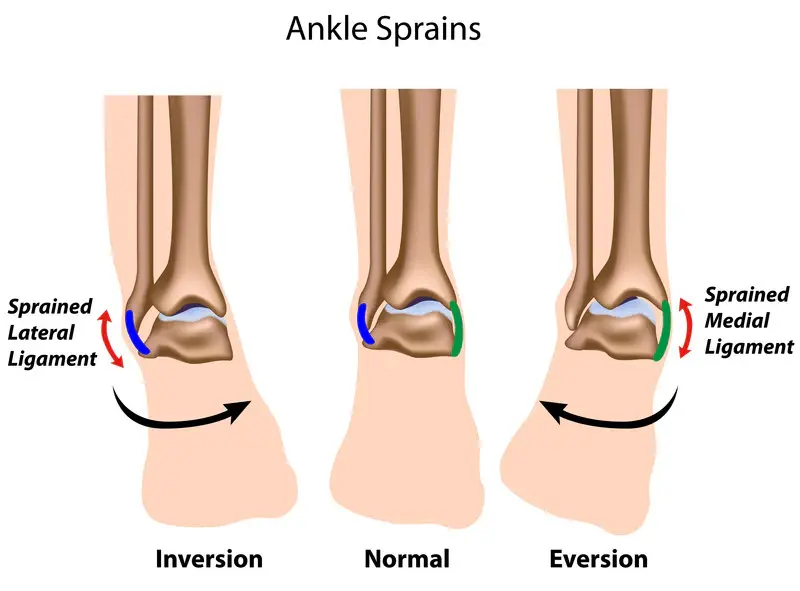
1. Excessive Ankle Pronation
(Inward collapse of the sole of the foot)
Symptoms:
The arch in the middle of the foot drops, and the foot closes inwards.
The knees tend to move inward.
Why might this happen?
Posterior tibial weakness
Weakness of the muscles in the sole of the foot
Insufficient hip stability
Hypermobile wrist joint
Results:
Stress on the inside of the knee
Deterioration at the hip and waist level.
Increased risk of plantar fasciitis.
Balance losses
Impairment of power transmission in movements.
2. Excessive Supination in the Ankle
(Weight transfer to the outside of the foot)
Symptoms:
The weight is placed on the outer edge of the foot.
The curve appears excessively high.
Why might this happen?
Overactivation of the outer foot muscles
Weakness of the inner foot muscles
Stiff/hipomobil ankle
Results:
Pain on the outer edge of the foot
Risk of inversion sprain
Calf and IT band tensions
Imbalance during jumping and running movements
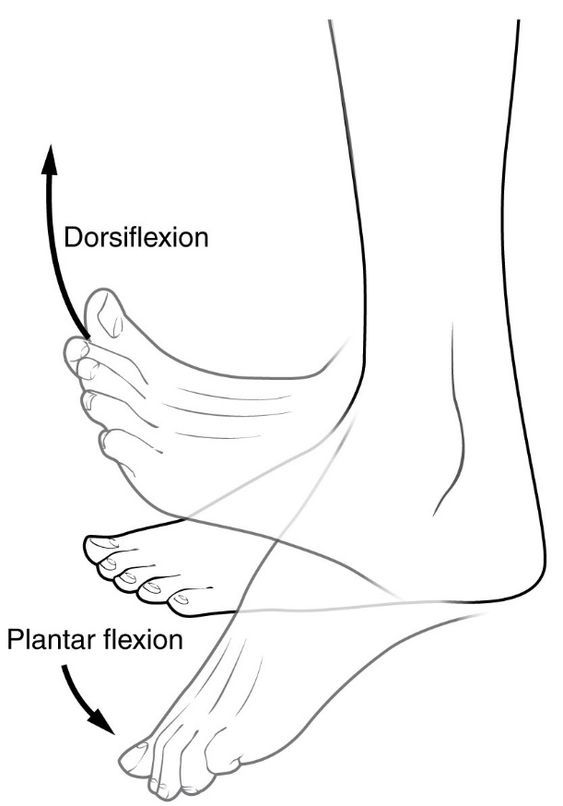
3. Inability to maintain a neutral ankle position.
(Loss of foot flexion-point control in reformer, mat, or standing exercises)
Symptoms:
When performing pointe, the ankle moves inward/outward.
In the flex position, the toes curl inward, not upward.
Why might this happen?
Weakness in the lower leg muscles
Lack of activation of the intrinsic muscles of the foot.
Core and pelvic instability
Proprioception weakness
Results:
Incorrect transfer of force during exercises
Loss of control on reformer pedals.
Cramps and tightness in the lower leg.
Loss of balance
4. Excessive Plantar Flexion or Dorsiflexion
(Overuse of leg flexibility)
Excessive Plantar Flexion (unnecessary extra points):
Tension in calf muscles
Clawing of the toes
Reduced thrust on the Reformer.
Excessive dorsiflexion (unnecessary extra flexion):
Achilles tendon strain
Feeling of tightness in the back of the foot.
Disruption of the flow of movement
5. Toe Squeezing / Clawing
(Footwork is very common on the Reformer, while standing work is common on the mat.)
Symptoms:
Fingers curl inward.
The soles of the feet contract excessively.
Why might this happen?
Trying to achieve stability with your fingers.
Insufficiency of the intrinsic muscles of the foot.
Balance anxiety
Results:
Excessive muscle tone in the calf muscles
Pain in the forefoot
Decreased quality of movement
Fatigue and cramps in the legs
6. Lifting the Heel Off the Ground (Unnecessary)
(Common occurrence in standing exercises)
Symptoms:
The weight shifts to the fingers.
The heel lifts off the stable ground.
Why might this happen?
Calf tension
Lack of balance control
Insufficient ankle mobility
Results:
Excessive strain on the knees
Balance losses
Foot pain
🔹 In short…
In Pilates, when ankle alignment is disrupted, the effect is not limited to the feet; it causes a chain reaction of disruptions throughout the entire knee-hip-lower back line . This is because the feet are the point of contact and force transmission for the entire body.
✔️ Common Elbow Position Errors and Their Consequences in Pilates
1. Excessively closing the elbows inwards (narrowing them inwards)
Mistake:
The elbows are narrower than shoulder width and very close together.
Results:
Shoulder joint entrapment → increases the risk of shoulder impingement.
Excessive tension in the chest and front shoulder muscles.
The triceps are overloaded, and core activation decreases.
There may be strain in the forearm and the inside of the elbow.
2. Opening the elbows excessively to the sides (opening them wider than shoulder width)
Mistake:
The elbows should be spread wider to the sides than the shoulders.
Results:
Shoulder stability is compromised, and the shoulder blades cannot provide proper support.
The trunk "wobbles" and loses its stability.
The mid-back muscles cannot be engaged.
Lateral (side) stress is placed on the elbow and shoulder attachment points → shoulder pain may occur.
3. Bringing the elbows too far forward (in front of the shoulder line)
Mistake:
Elbows should be positioned further forward than shoulder level.
Results:
The shoulder joint bears weight forward → anterior shoulder pain may develop.
Neck tension increases.
Core muscles remain weak, making it easier for the lower back to collapse.
Posture stability decreases, the pose becomes more difficult, but "wrong is difficult".
4. Avoiding pulling the elbows too far back (behind the shoulder line)
Mistake:
Elbows should be behind shoulder level.
Results:
Excessive strain on the back of the shoulder → stress on the ligaments in the back of the shoulder.
The rib cage drops forward, the back rounds.
Core activation is impaired.
All the weight is placed on the neck-shoulder line → the likelihood of upper back and neck pain increases.
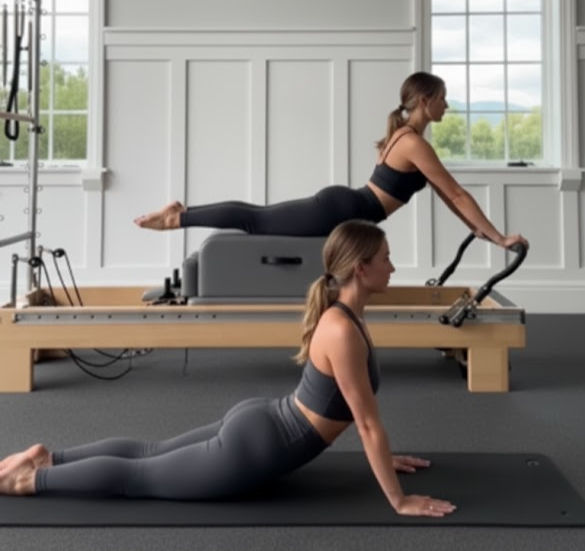
✔️ Correct Elbow Position
Elbows should be positioned directly under the shoulders , neither forward nor backward.
Opening the width of the shoulder
Weights are evenly distributed.
Elbows firmly on the ground, pressure balanced.
Wrist Posture and Grip Errors in Pilates
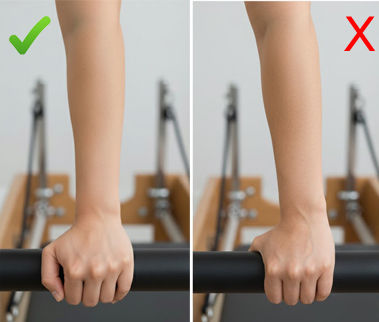
1. Bending the wrist too far back (hyperextension)
❌ Error
Excessive backward bending of the wrist during exercises where the hands are on the ground (plank, quadruped, push-up variations).
⚠️ Results
Wrist pain and increased pressure.
Stress on the median nerve (which can cause carpal tunnel syndrome-like symptoms)
Overstrain in the forearm muscles
Impairment of shoulder stability
✔️ The truth
Spread your palms wide on the floor and open your fingers.
The wrist and forearm should form a straight line.
Pressure should be distributed evenly between: fingers + top of the palm + heel of hand.
Place a slightly angled wedge block under your hands if necessary.
2. Close your fingers or put all the pressure into your palm.
❌ Error
Inactive fingers
Concentration of the load to a single point.
⚠️ Results
Excessive strain on the wrist
Imbalance at the elbow and shoulder level.
A feeling of "collapse" and powerlessness.
✔️ The truth
Spread your fingers apart and press gently against the floor.
Like a "claw," it maintains active contact between the fingertips and the ground.
Distribute the load into the triangle of fingers–metacarpals–palm.
3. Place the weight only on the wrist.
❌ Error
With the shoulder girdle not active, all the weight is placed on the wrist.
⚠️ Results
Wrist pain, inflammation
Impairment of scapular stability
Tension in the neck and shoulders
✔️ The truth
Keep your scapulae active by gently pushing your shoulder blades upward and outward.
Extend the trunk upwards.
Weight distribution: evenly distributed between shoulders, core, hips, and arms.
4. Wrist alignment not conforming to body width.
❌ Error
Placing the hands too narrowly or too widely
⚠️ Results
Torsion stress on the wrist
Disruption of the fuselage line
feeling of tipping to the side
✔️ The truth
Hands shoulder-width apart
Fingers should point forward.
Palms should be placed symmetrically.
In which movements are these mistakes more common?
Plank
Quadruped / hands-and-knees positions
Pilates push-ups
Down stretch, long stretch (Reformer)
Elephant (Reformer)
Up stretch
Push through bar, long back stretch (Cadillac)
In armwork movements (in movements where straps are held and pulled, the wrist bends downwards or upwards; it is important to keep the wrist angle neutral).
Tips for Improving Wrist Posture
Wrist mobilization during warm-up: circular movements, stretching.
Strengthening the forearm muscles.
Use a yoga wedge or small towel roll for wrist support.
Plank alternative using fists instead of palms (on a soft surface)
2- Incorrect Breathing Techniques
In Pilates, breathing technique enhances the effectiveness of movements. However, many people ignore or incorrectly apply breathing techniques. This can lead to problems such as inactivity of the abdominal muscles and lack of upper body contraction during breathing. Correct breathing technique stabilizes the abdominal muscles during movement and keeps the body integrated.
Suggestion: Think about breathing in and out with each movement. Tighten your abdominal muscles as you take a deep breath, and remember to exhale during the movement. However, depending on the movements...
You can find more information about changing breathing techniques in my previous blog post.
3. Insufficient activity of abdominal muscles.
In Pilates, the abdominal muscles form the core of the movements. However, many people fail to activate these muscle groups sufficiently, leading to imbalance. Insufficiently strong abdominal muscles can cause problems in the lower back and upper back areas.
Tip: Try to activate your abdominal muscles before each exercise. Support this muscle group's work by tightening your abdominal muscles while taking deep breaths.
4- Fast and Uncontrolled Movements
In Pilates, it is essential to perform movements slowly and in a controlled manner. Fast and uncontrolled movements can lead to incorrect form and consequently injuries. It also means the muscles are not working sufficiently.
Tip: Perform each movement slowly and with control. This ensures proper muscle function and reduces the risk of injury. In exercises using a rope, we can control this by ensuring the rope's tension remains constant from start to finish. THE ROPE MUST BE TENSE, NEVER LOOSEN.

Recommendations and Summary
There are many points to consider when practicing reformer and mat pilates. In this article, we focused on proper breathing techniques, insufficient abdominal muscle activity, rapid and uncontrolled movements, and compensation zones. It's worth reiterating that performing movements correctly during pilates reduces the risk of injury and forms the foundation for achieving desired physical health.
Maintaining a healthy posture during movements is essential to prevent excessive strain on critical areas such as the lower back and neck. Additionally, proper breathing techniques and activating the abdominal muscles will make your Pilates sessions more effective. Remember, Pilates is not just an exercise, but also about the integration of body and mind.
EXTRA
Corrective and preparatory sentences used by coaches to provide guidance during exercises.
- during craniospinal tracking (in movements where the lumbar region is moved forward or backward)
-Press down on your lower back, avoid arching your lower back (during exercises performed lying on your back)
-Raise your head to your shoulder blades and keep your neck closed (especially to close the gap in your lower back during movements where your legs are extended parallel and the curve in your lower back causes a flaw).
-shoulders squeezing, raising, and pulling back (in movements where the arm is engaged, holding onto straps or a footbar, with hands placed on the mat)
-Close your rib cage (In exercises performed lying on your back, face down, with your hands on the footbar or mat, using straps for pulling and pushing)
- bringing the shoulder blades together (in prone mat or reformer exercises and in hand and strap pulling exercises)
-Pelvic rotation (Only in movements or postures where we want upper extremity rotation)
-Put your hips on the ground (When performing exercises lying on your back, it's necessary to maintain spinal integrity)
-Tighten your hip and abdominal muscles, activate your core (with every exercise).
-Breathe in and breathe out (with each movement)
- Ankle rotation (in exercises where we stand on the footbar and attach straps to our feet)
-Toe point, flex (In all mat and reformer exercises where we press on the footbar, attach straps to our feet, and the leg can be involved)
-Knee rotation (in and out) (in leg exercises where we press on a footbar, attach straps to our feet, or need to align the ankle, knee, and pelvic position)


Comments