What is Lordosis? Positive Effects of Pilates Reformer on Lordosis and Sample Workouts

Our spine is one of the natural structures of our body and has many important functions. Lordosis is one of the natural curves found in the spine and refers to the forward curve that occurs in the lower back region. In this article, we will explore the anatomy of lordosis and the positive effects of Pilates reformer exercises on lordosis. We will also provide information on sample workouts and how to perform them.
🦴 What is Lordosis?
“ Lordosis ” refers to the naturally occurring inward curvature of the spine in the cervical and lumbar regions. It is actually a completely normal and healthy structure; the spine functions thanks to these curvatures:
It carries body weight evenly.
It provides shock absorption (for example, when jumping),
It supports balance and mobility.
However, when this curvature is more or less than normal, it turns into a postural disorder:
🔼 Hyperlordosis (increased curvature of the lower back) : The abdomen protrudes forward, and the hips turn backward ("duck butt" appearance).
🔽 Hypolordosis (flattened lower back) : The natural curve of the lower back decreases, the back flattens, and mobility is reduced.
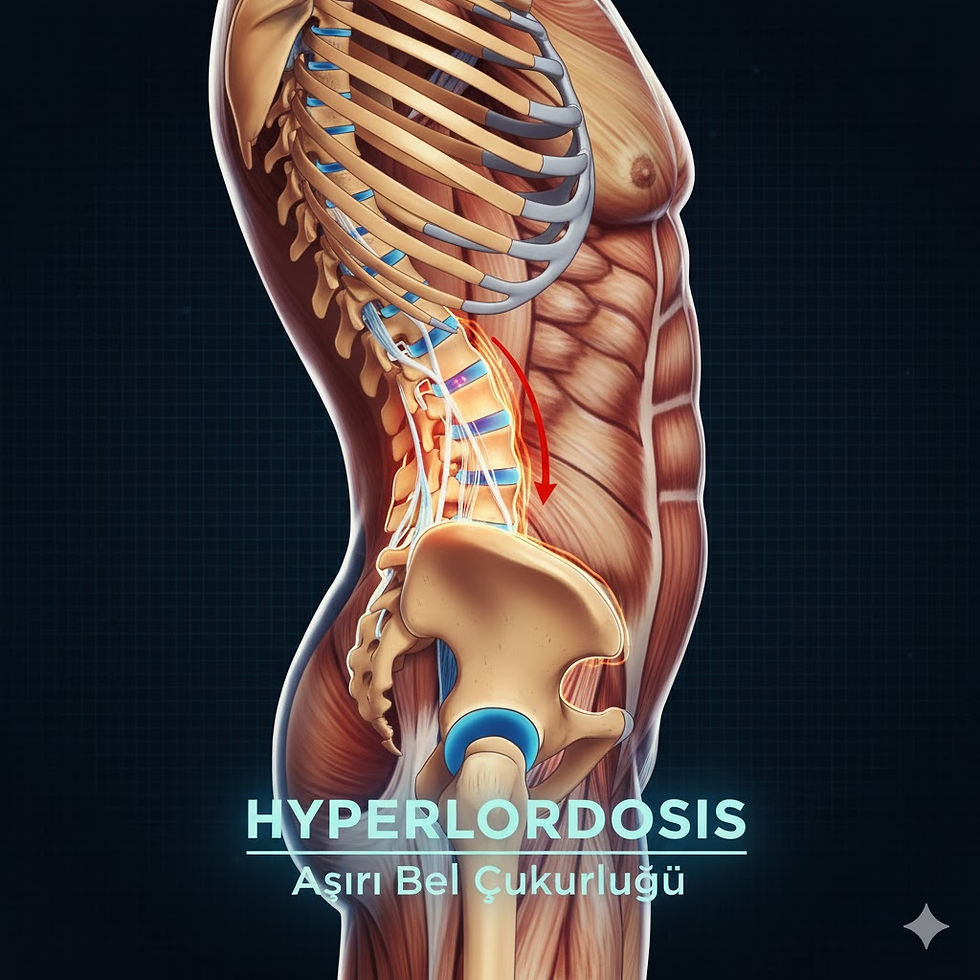
Hyperlordosis can cause serious problems with spinal health over time. This condition can lead to muscle imbalances, causing discomfort in the lower back. Therefore, controlling lordosis and maintaining a healthy spinal structure is essential.
⚖️ The Effects of Lordosis on Our Lives
An unbalanced lordosis (especially hyperlordosis) can lead to the following problems:
Back and neck pain
Disc pressure and herniation risk
Posture disorder (appearance of abdomen protruding and shoulders receding)
Muscle imbalances:
Muscles that shorten: lower back muscles, hip flexors
Weakened muscles: abdominal muscles, hamstrings, gluteus muscles
Factors such as prolonged sitting, incorrect exercise techniques, or wearing high heels can increase lordosis.

Targeted exercises performed on a Reformer specifically strengthen core muscles and increase flexibility in hip and leg muscles. This helps reduce excessive curvature in the lower back and promotes a healthier spinal alignment.
🤸♀️ The Positive Effects of Pilates Reformer on Lordosis
The Pilates Reformer is a very effective piece of equipment for retraining spinal alignment and activating deep abdominal muscles. It offers the following benefits for Lordoz:
It increases pelvic and spinal awareness. → The person relearns the neutral spinal position (natural curvature).
It strengthens the core (abdominal-lower-pelvic floor) muscles. → As abdominal muscles strengthen, the lumbar curve decreases, and the spine is carried more stably.
It stretches the hip flexors (especially the iliopsoas). → Shortening of these muscles is the main cause of hyperlordosis.
It activates the gluteus and hamstring muscles. → It helps the pelvis remain in the correct position.
It improves posture awareness. → Correct posture is maintained in daily life as well.
Sample Workouts
Here are some examples of workouts that can be done with a Pilates reformer:
1. Footwork
This exercise helps strengthen leg muscles. Lie on your back on a reformer board with your feet on the platform. Repeat by straightening and then straightening your legs. The image below also shows an example of stretching the hamstring and calf muscles with the running movement in this series.

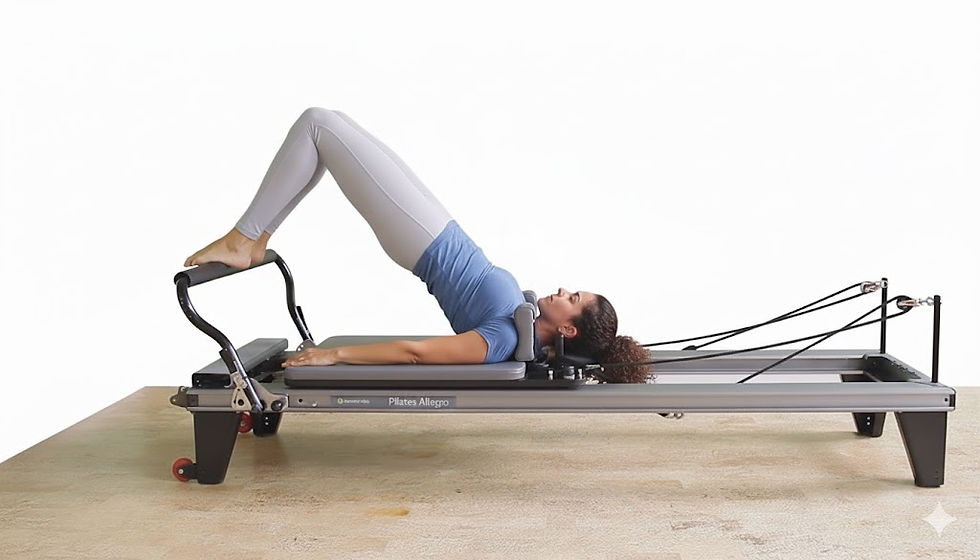
2. Bridging
Lie on your back, bend your knees, and place your feet on the reformer. Lift your hips to get into a bridge position. This works your lower back and hip muscles.
3. Hundred
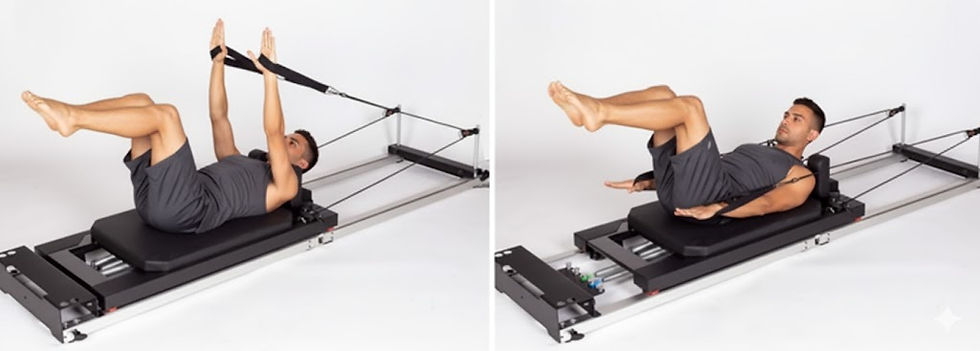
Lie on your back on the reformer. Breathe in and out while extending your legs and opening your arms to your sides. This movement activates all the muscles in your body and strengthens your core muscles. The version of this exercise with your legs straight is the most correct version. However, for someone with hyperlordosis, I recommend starting with the version shown in the picture until their core muscles are stronger.
4. Short Spine Massage
While lying on your back, raise your legs and round your waist as you return to the reformer. This exercise increases spinal flexibility. The headrest must be closed during this movement.

5. LEG CIRCLE
Lie on your back and attach the handles to your feet using the long ends of the straps. Extend your legs straight out and draw a D shape, moving from the outside inwards (10 repetitions) and from the inside outwards (10 repetitions). The goal is to improve pelvic control and core strength. Benefits include balancing the lower back muscles and helping to reduce excess lordosis.

These exercises should be tailored to each individual's needs under the supervision of a specialist. Furthermore, if hyperlordosis is caused by an underlying medical condition, it is important to consult a doctor first.
Why is Expert Guidance Important?
Exercises performed on a Pilates reformer can lead to undesirable results if not done with correct form and technique. A qualified instructor will guide you in performing the movements correctly. They can also help you create a personalized program based on your body type and needs.
In conclusion, a strong core can help reduce lordosis by supporting the spine. These health steps are important for maintaining both physical and mental balance in the long term.
🧘♀️ Additional Suggestions
Try to maintain a "neutral pelvis" position in daily life.
If you're sitting for a long time, get up every 30-40 minutes.
Strengthen your abdominal muscles and regularly stretch your hip flexors.
Supplement your Reformer workout with Pilates mat exercises (e.g., Hundred , Single Leg Stretch ).


👍